

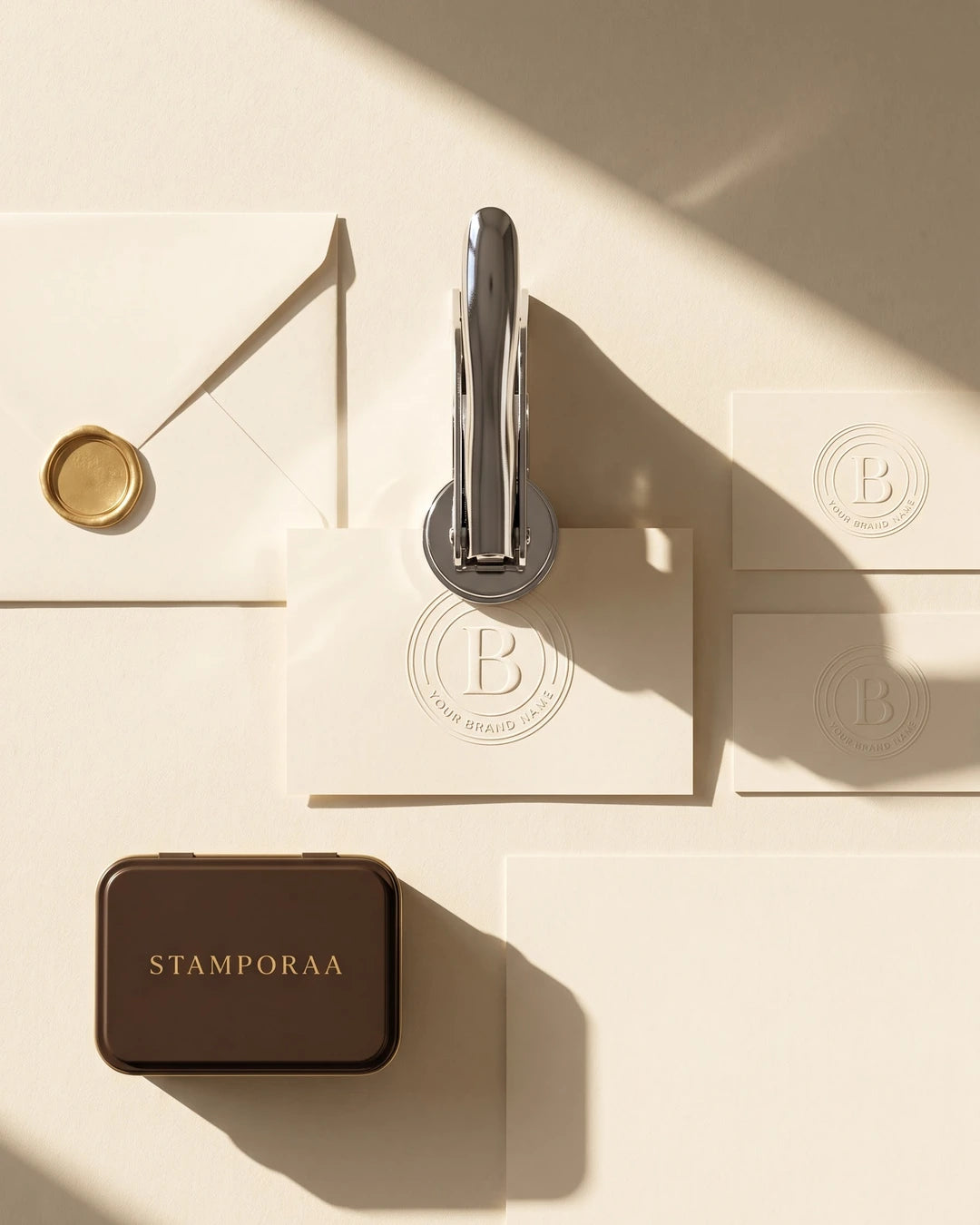


A lot of people search for a paper embosser with ink. It is a fair thing to look for: you want a seal that looks rich, and colour seems like part of that. But a paper embosser does not use ink at all, and that is the whole reason it looks the way it does.
This guide explains what an embosser actually does, why the mark is colourless by default, and four practical ways to add gold, silver or colour when you want it.
How a paper embosser works
An embosser has two matched metal plates. One is raised, one is recessed. When you squeeze the handle, the paper is pressed between them and the fibres take the shape of your design. The result is a raised seal you can see in raking light and feel with a fingertip.
Nothing is added to the paper. That has three consequences worth knowing:
- The mark cannot smudge, fade or bleed, because there is nothing on the surface to move.
- It cannot be scanned or photocopied faithfully. A copy shows a faint shadow at best, which is why embossed seals are used on certificates and documents.
- It is tone on tone. White paper gives a white seal. The elegance comes from light and shadow, not pigment.
All of our personalised paper embossers work this way, with a stainless steel plate cut to your name or logo.
Way 1: Emboss onto gold or silver seal cards
This is the easiest route to colour, and the one most people are really picturing when they search for an embosser with ink. You emboss a metallic sticker instead of the page, then peel it and apply it wherever you want.
The Signature Seal embossing cards come as a set of 20 in gold, silver or white, from ₹299. The metallic foil catches light on the raised edges, so the seal reads clearly even from a distance. They are the standard finish for certificates, wedding envelopes and premium packaging.
If you are ordering an embosser at the same time, the Celestial Cipher embosser has a bundle option with 20 gold cards included, at ₹1,869 for the 40 mm size.
Way 2: Ink the raised surface after embossing
A craft technique that gives a two-tone seal. Emboss the paper first. Then take an ink pad and lightly skim it across the raised impression, holding the pad almost flat and pressing very gently. Only the high points pick up colour, and the recessed areas stay paper white.
Tips that make it work:
- Use a pigment or metallic ink pad rather than a watery dye ink, which spreads into the fibres.
- Practise on scrap from the same paper first. Too much pressure flattens the relief.
- Let it dry fully before stacking sheets.
Way 3: Pair the embosser with an inked stamp
Some jobs need both: a visible printed logo and a tactile seal. A common setup for small businesses is an inked logo stamp on the box or bag, and an embossed seal on the thank you card inside.
The MarkMyBrand custom logo stamp starts at ₹499. If you want both tools with the same design, the Valentino Luxe stationery set pairs a metal embosser with a wooden handle rubber stamp at ₹1,899.
Way 4: Emboss over printed or coloured paper
The seal takes on the colour of whatever it is pressed into. Emboss a kraft card and you get a warm brown seal. Emboss a deep green envelope and the seal is green, with highlights where the light hits. Printed letterheads, coloured cardstock and patterned wrapping paper all work, as long as the paper is not laminated or coated in plastic.
Which paper takes an embossed seal best
Our embossers are designed for paper roughly between 80 and 180 gsm. In everyday terms:
- 80 to 100 gsm: office paper, book pages, letter paper. Clean, crisp seal.
- 120 to 180 gsm: envelopes, invitation card, light cardstock. Deeper, more visible relief.
- Thick board, laminated or plastic coated paper: not recommended. The plate cannot shape it and you risk a weak or cracked impression.
Common questions
Can I buy a paper embosser that uses ink?
An embosser by definition presses without ink. If you want ink, you want a stamp. If you want both, use one of the methods above.
Does embossing work on gold foil stickers?
Yes. Metallic seal cards are made for it, and the raised edges catch light well.
Will inking the relief damage the embosser?
No. The ink goes on the paper after embossing and never touches the plate.
How fast can I get a custom embosser?
Each plate is made to your approved design. Dispatch is usually same day to 2 to 3 days after you approve the design proof.
New to embossers? Start with the custom paper embosser guide, and read how to use a paper embosser for a clean impression every time.

