


Doctors order custom embossers from us regularly, and the reasons are practical. A clinic hands out a lot of paper: fitness certificates, referral letters, reports, discharge summaries. A raised seal on that paper tells the reader it came from your hands and not from a photocopier.
This guide covers what a doctor's embosser is for, what it does not replace, and how to set one up.
What an embosser does for a clinic
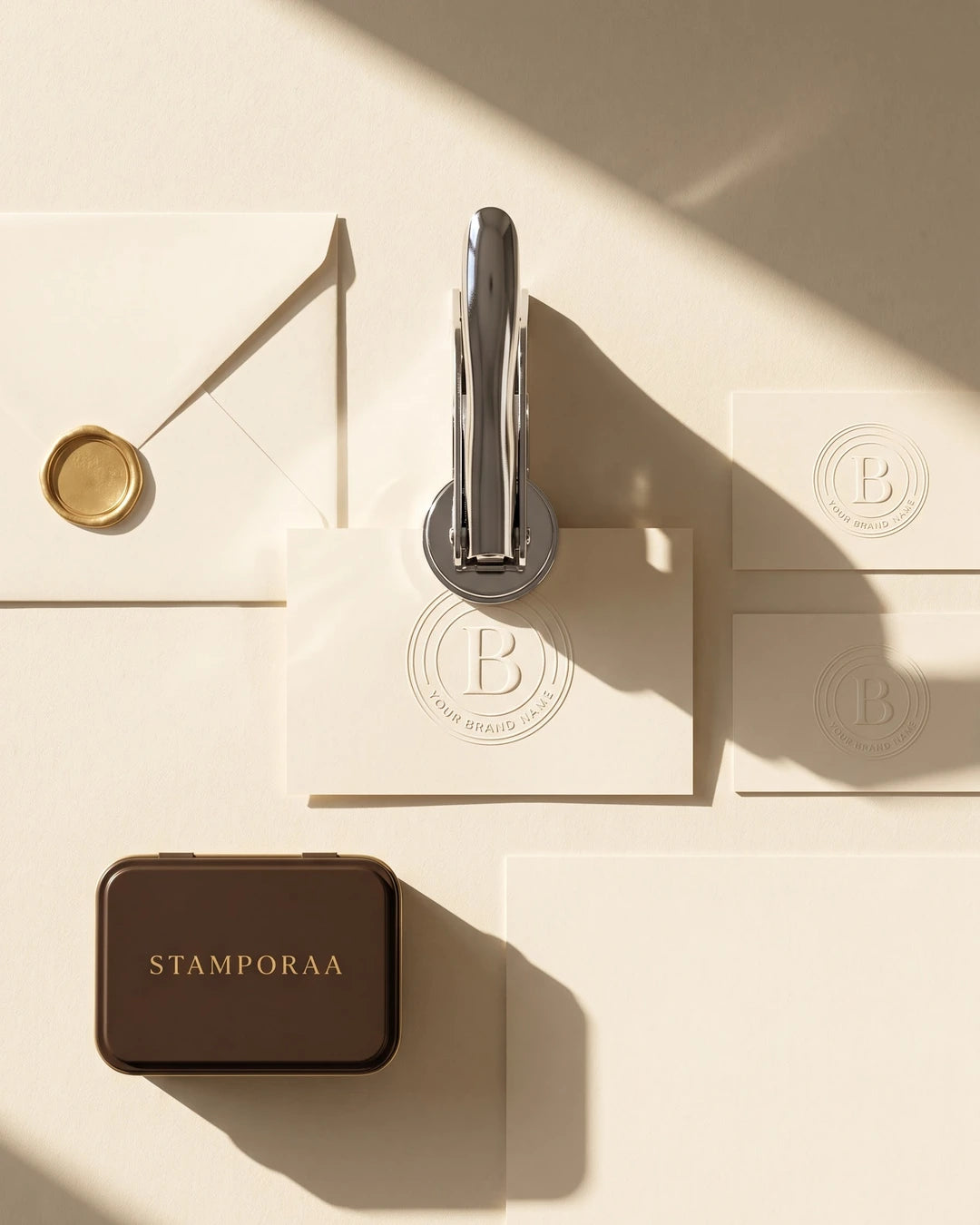
An embosser presses your name or logo into the paper as a raised relief. There is no ink, so a scan or photocopy shows only a faint shadow. The person holding the page can feel that it is the original.
- Medical and fitness certificates carry a seal next to your signature.
- Referral letters and reports look considered, not printed in bulk.
- Welcome folders for new patients or for a new clinic opening look finished.
- Your own books get a library seal, which matters when a colleague borrows a textbook and forgets to return it.
What it does not replace
A prescription or certificate still needs what the rules ask for: your name, qualification, registration number and signature. An embosser is a mark of authenticity and brand, not a substitute for any of those. Keep your registration number stamp for that.
A personalised self-inking stamp handles the registration details, and the embosser sits beside it. Our guide on embosser vs rubber stamp explains why most desks end up with both.
What to put on the plate
Keep it short and clear. Three layouts work well on a 40 mm or 50 mm plate:
- Name in an arc across the top, qualification below, such as the clinic name on top and "Dr" with your name below.
- A clinic logo in the centre with the clinic name around it.
- A simple medical motif with your name. The embosser designer has a stethoscope design you can start from.
A registration number can go in the bottom arc if it is legible, which is easier on the 50 mm size. Embossers show solid shapes best, so avoid hairline lines and tiny type.
A gift for a new doctor
A personalised embosser is also a gift people keep for decades. It suits a white coat ceremony, an MBBS or MD result, or a new clinic. Put "Dr" and the name on it, and add a pack of gold seal cards (20 for ₹299) so it can be used the first day.
Plate layouts doctors actually order
The plate is small, so the wording has to be short. These are layouts that read well at 40 mm or 50 mm:
- Clinic seal. Clinic name in the top arc, your name and "Dr" in the bottom arc, a small mark in the centre.
- Personal seal. Your name in a ring with the stethoscope motif from the designer in the middle.
- Hospital department seal. Department name in the top arc, hospital name in the bottom arc. Each doctor in the department can have a personal plate as well.
- Library seal for textbooks. "From the library of" in the top arc and "Dr" with your name below. Textbooks are expensive, and a seal helps them come back from colleagues and juniors.
Where it earns its place on a clinic desk
Think about the papers that leave your clinic and are likely to be copied: a fitness certificate for a job or a sports club, a referral letter to a specialist, a medical summary a patient carries to another city. These are the places where a reader may wonder whether a page is the original. A raised seal answers that before they ask.
It also works on the softer side of practice. A new clinic can emboss its welcome card, a paediatrician can seal a "brave patient" certificate for a child, and a physiotherapy centre can seal a completed programme certificate. People keep paper like that.
Mistakes to avoid
- Treating the seal as a prescription stamp. Registration details go in ink, in your normal format.
- Crowding the plate. A name, a clinic and a qualification list will not fit. Pick two items.
- Tiny numbers. A long registration number in small type fills in and reads as noise. Use 50 mm if it must be there.
- Leaving it on the reception desk. The plate is only meaningful if you control it. Keep it in your own drawer.
40 mm or 50 mm: which size
| Size | Price | Best for |
|---|---|---|
| 40 mm | ₹1,669 | A name or short firm name in an arc, one small mark in the centre |
| 50 mm | ₹2,869 | Longer names, a registration or enrolment number, finer logo detail |
| Gold seal cards, set of 20 | ₹299 | A gold finish, or sealing paper that is too thick to emboss directly |
As a rule of thumb, count the characters you want on the plate. Up to about twenty fits 40 mm comfortably. Beyond that, choose 50 mm.
How to order
- Open the Impressa custom identity embosser. It takes your own name, text or logo. The 40 mm size is ₹1,669 and the 50 mm size is ₹2,869.
- Choose your text, or switch on the image option and upload your logo. You can also build a preview in the embosser designer.
- Approve the design proof we send. Dispatch is usually same day to 2 to 3 days after approval.
Common questions
Can dentists, physiotherapists and vets use the same?
Yes. The tool is the same for any practice. Only the text changes.
Will it work on a prescription pad?
It suits normal paper up to about 180 gsm. Use it on certificates and letters, and keep the stamp for the prescription itself.
Can I get gold instead of a blind seal?
Yes. Emboss a gold seal card and stick it beside your signature.
Do hospitals accept an embossed seal on a certificate?
It depends on the institution and the document. Most formal documents also need your signature and registration details, so treat the seal as an addition and check with the receiver if the document is for an official purpose.
Should I get a stamp or an embosser?
If you can only have one, the stamp does the daily work. An embosser is for the finishing mark on certificates, letters and gifts. Most clinics end up with both.
Can I order a plate for each of my clinics?
Yes. Order one plate per location with its own clinic name and tell us the quantity at checkout.
How do I care for the plate?
Keep it dry, press on a firm, flat surface and do not force it on thick card.
More in this series
The same embosser works differently on every desk. Read the guide for your profession:
- Lawyers and advocates
- Chartered accountants
- Engineers
- Architects and interior designers
- Teachers and professors
- Authors and writers
- Consultants, coaches and freelancers
New to embossers? Start with how to use a paper embosser, or compare it with a rubber stamp in embosser vs rubber stamp.

