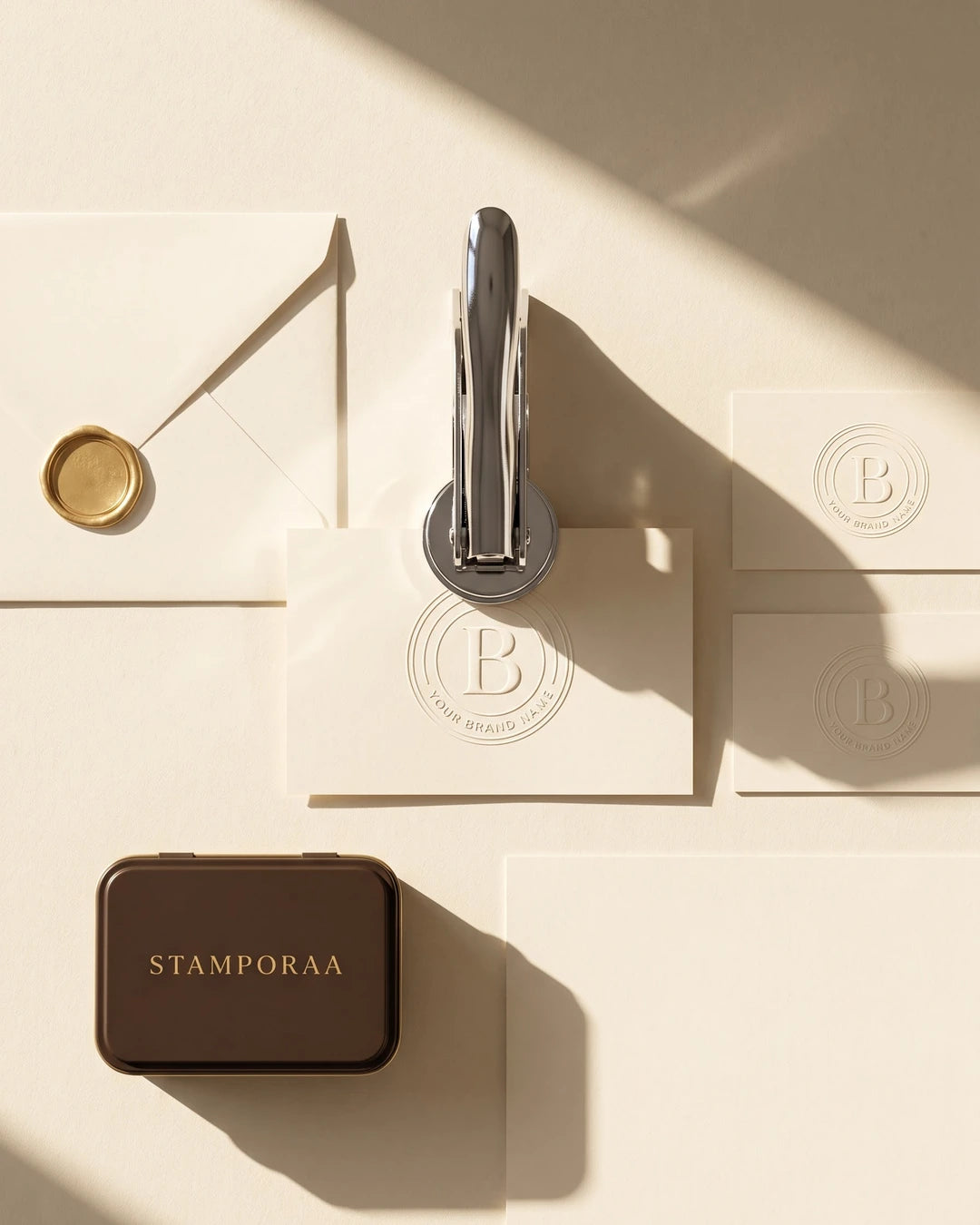


Most business stationery looks the same: a printed logo on white paper. A custom embosser changes that with one small raised seal. It costs less than reprinting a run, works on stationery you already own, and signals care in a way a flat print cannot. This guide shows where to use it and how to get it right.
Why a raised seal changes stationery
People notice texture before they notice type. When a client runs a thumb over your letterhead and finds a raised seal, the paper feels deliberate. It is a quiet cue that the business pays attention to detail, and it costs a few seconds per sheet.
Where to place the seal
| Item | Where to emboss | Tip |
|---|---|---|
| Letterhead | Bottom corner, or beside the signature | Leave space so it does not overlap text |
| Envelope flap | Centre of the flap | Emboss before sealing the envelope |
| Invoices and quotations | Near the total or signature | Adds authenticity to hand issued copies |
| Thank you cards | Bottom centre or corner | Pair with a handwritten line |
| Business cards | On the back, away from printed text | Use thin card for a clean press |
| Certificates and offer letters | Over the signature edge | Press before laminating |
Choose your artwork
Your seal can be your logo, your initials or a simple symbol with your name. Keep it bold and uncluttered. If you plan to use your logo, read how to prepare it for a custom embosser. For short text and initials, the 40 mm plate is neat. For a logo with detail, the 50 mm plate is safer.
Use it with the rest of your branding
An embosser is one part of a small branding kit. Used together, the pieces look designed:
- A custom logo rubber stamp for colour on boxes, bags and invoices.
- A raised seal on letterheads and cards for texture.
- A printed logo ribbon to close gift packs.
Our guides on branding with paper embossers and branded packaging cover how to put the full kit together.
Which paper to use
Stationery paper is usually ideal. A medium weight letterhead takes a seal well. Very thick business card stock presses shallow, so emboss the thinner paper, or use a seal card for thick items. Our guide to fixing faint impressions explains how paper affects the result.
Speed and consistency
A hand embosser fits into a workflow. Stack the letters, press the seal in the same spot on each with a pencil mark or a template card as a guide, and a hundred sheets take minutes. For repeat orders and customers, this is cheaper and faster than reprinting special stationery.
Who uses it
- Small shops and boutiques sending orders with a handwritten note.
- Home bakers and makers adding a seal to boxes and cards.
- Consultants and freelancers signing proposals. See the guide for consultants, coaches and freelancers.
- Schools and offices stamping certificates. See embossers for certificates.
A five minute stationery routine
Make a pencil template: trace the paper edge on a spare sheet, mark where the seal should land, and keep it under each page as a guide. Press a test on a scrap first. Then work through the stack, pressing once per sheet with the same grip. Check the first, the middle and the last sheet for consistency.
What not to emboss
Skip glossy coated sheets, because the coating cracks under pressure. Skip areas with a solid printed colour block, which flatten the relief. Avoid pressing over a fold or a staple. If the stationery is already laminated, emboss before laminating or use a seal card on top. These small checks keep the finish clean on every page you send out.
Doing the whole batch in one sitting keeps the position and pressure identical, which is what makes the stationery look professionally made rather than stamped by hand on different days.
How to order your embosser
- Open the Impressa custom identity embosser. It takes your own name, text or logo. The 40 mm size is ₹1,669 and the 50 mm size is ₹2,999.
- Type your text, or switch on the image option and upload your logo. You can also build a live raised preview in the embosser designer.
- Approve the design proof we send. Dispatch is usually same day to 2 to 3 days after approval.
Browse every ready design in the personalised paper embossers collection.
Common questions
Can I emboss on a printed letterhead?
Yes. Place the seal in a blank area so it does not press over printed text or a solid colour block.
Will it work on envelopes?
Yes. Emboss the flap before you seal it, on a flat surface.
Should I choose 40 mm or 50 mm for stationery?
40 mm for initials and simple marks. 50 mm for a detailed logo.
Does an embossed seal replace a signature or stamp?
No. It adds a mark of authenticity, but it does not replace a signature or any format that a rule requires.
Can I use both an embosser and a stamp?
Yes, they work well together. The stamp adds colour, the embosser adds texture.
